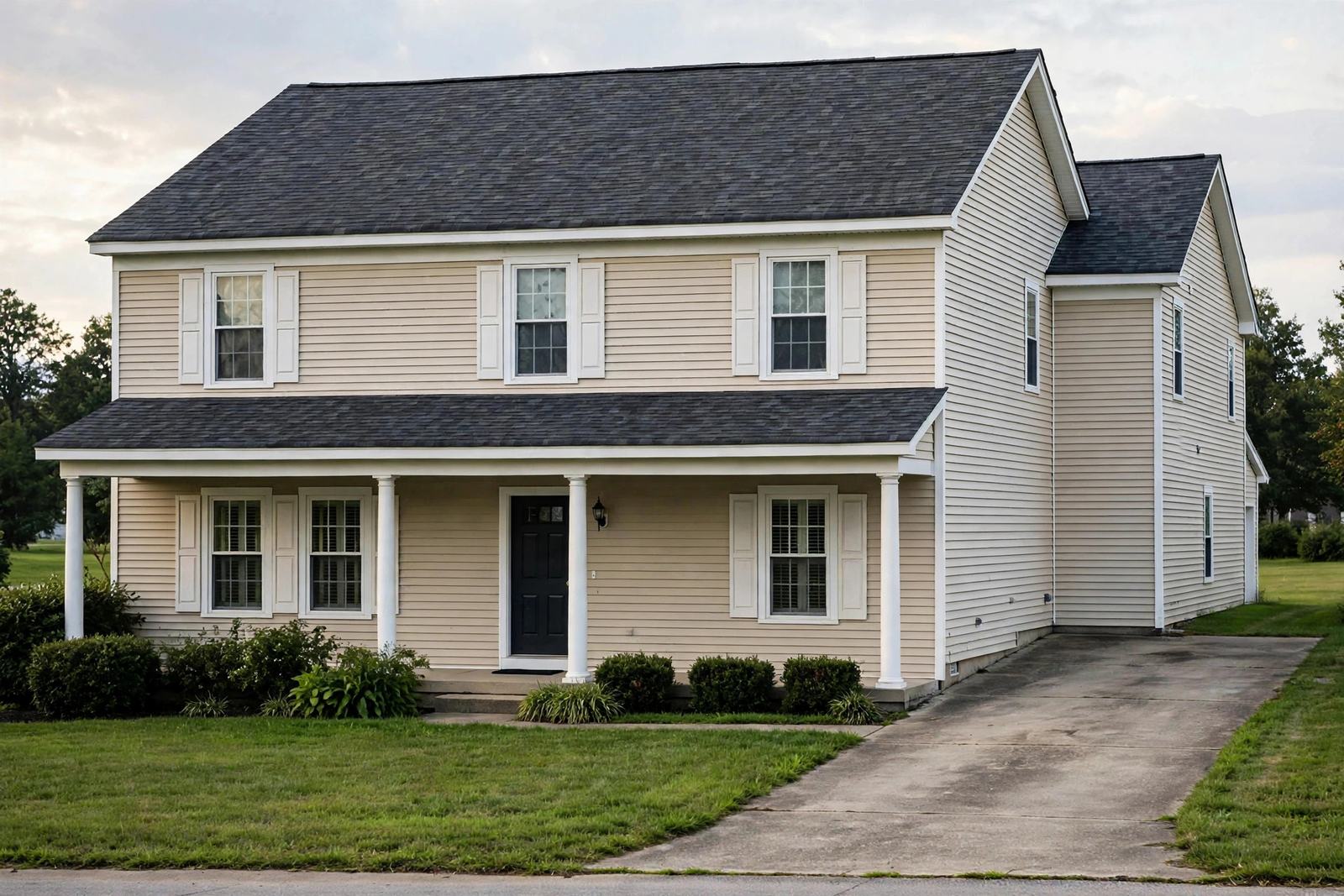
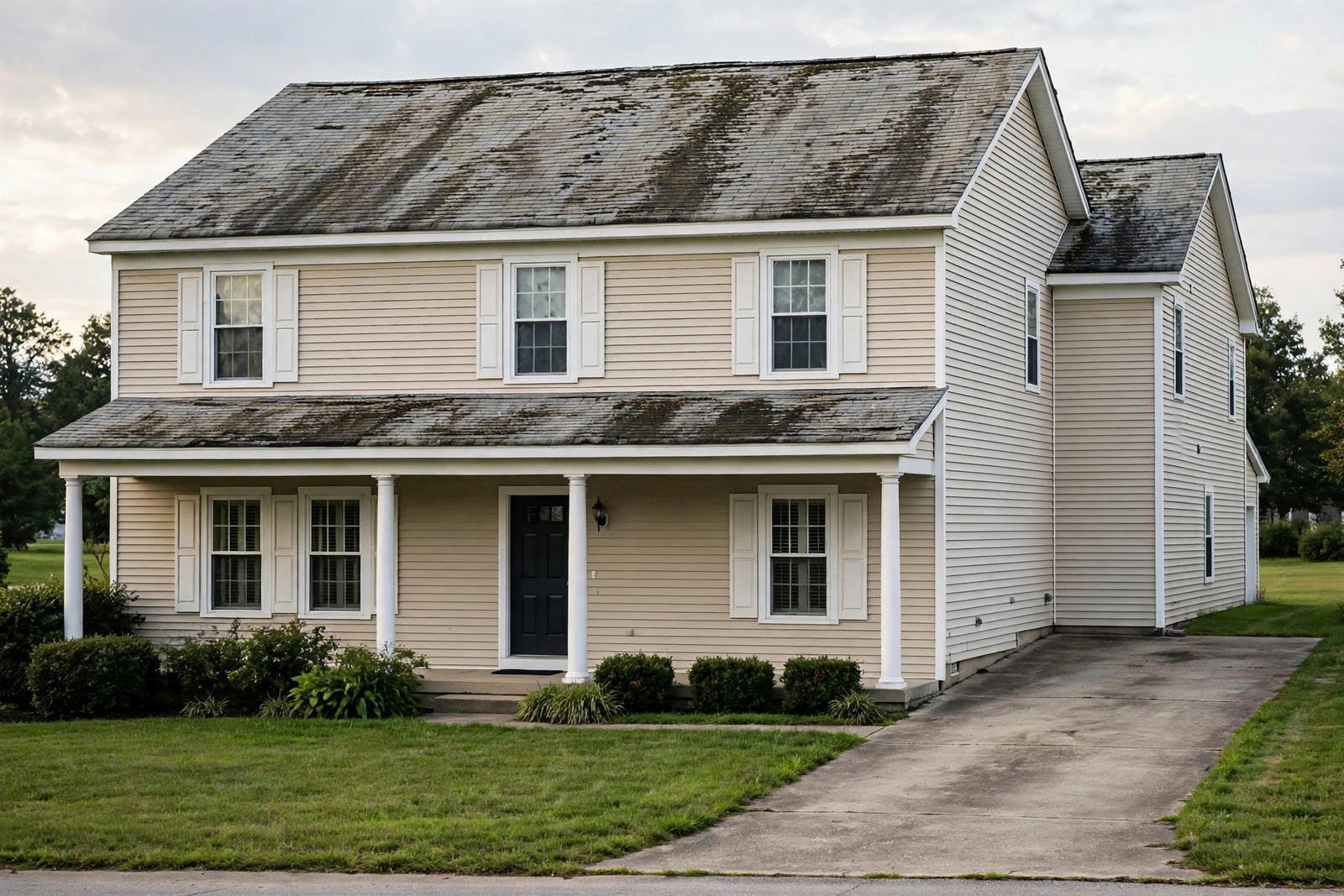
Your estimate is below — the sample shows exactly what you get, priced from your own roof's measurements.
Your roof, measured
Sample home · Marysville, Washington 98270
Want real prices instead of a range?
Want real prices? We can send your roof details — size, pitch, and the estimate — to local roofers and let them send you their price. We never give them your phone number. You compare in peace, and if you like one, you decide who gets to contact you.
Roofers see
- Roof size, sections & pitch
- Material you picked & the estimate range
- City & ZIP code
Roofers never see
- Your name
- Your phone number
- Your email or street address
What's in it for us? If you choose one of these roofers, they pay us a small referral fee. You never pay us anything, and it doesn't change the price they give you.
No thanks — I'll just use the free estimate. That's fine. It stays free either way.
Demo mode: lead capture opens area by area as roofers are vetted (Washington first). This form currently validates your entry on this page only — nothing is sent or stored.
What a new roof costs, straight up.
Most homeowners pay $9,500 – $19,000 for a full asphalt shingle replacement in 2026; the national average is about $14,500. Where you land depends on material, size, and pitch — here is the honest math, per square (100 ft², installed, including tear-off):
| Material | Per square | Typical 24-square roof | Lifespan |
|---|---|---|---|
| Asphalt Shingle — 3-Tab | $350 – $475 | $8,400 – $11,400 | 15-20 years |
| Asphalt Shingle — Architectural | $450 – $675 | $10,800 – $16,200 | 25-30 years |
| Metal — Exposed Fastener | $850 – $1,300 | $20,400 – $31,200 | 40-50 years |
| Metal — Standing Seam | $1,100 – $1,850 | $26,400 – $44,400 | 40-60 years |
| Cedar Shake | $700 – $1,150 | $16,800 – $27,600 | 25-35 years |
| Concrete / Clay Tile | $1,200 – $2,100 | $28,800 – $50,400 | 50+ years |
Washington
Architectural shingle runs $476–$713 per square installed. Moss, moisture, and tall firs make tear-off condition the swing factor.
Texas
Impact-resistant shingles earn insurance discounts in hail country — often worth the upgrade math.
Florida
Hurricane code drives underlayment and fastening costs up — and a new roof can pull insurance premiums down.
Roof costs by state:
- Alabama
- Alaska
- Arizona
- Arkansas
- California
- Colorado
- Connecticut
- Delaware
- Florida
- Georgia
- Hawaii
- Idaho
- Illinois
- Indiana
- Iowa
- Kansas
- Kentucky
- Louisiana
- Maine
- Maryland
- Massachusetts
- Michigan
- Minnesota
- Mississippi
- Missouri
- Montana
- Nebraska
- Nevada
- New Hampshire
- New Jersey
- New Mexico
- New York
- North Carolina
- North Dakota
- Ohio
- Oklahoma
- Oregon
- Pennsylvania
- Rhode Island
- South Carolina
- South Dakota
- Tennessee
- Texas
- Utah
- Vermont
- Virginia
- Washington
- West Virginia
- Wisconsin
- Wyoming
Costs verified October 2026 — how we get our numbers.
Measured from space. Priced on your terms.
We measure your roof
Satellite imagery gives us your roof's true area, sections, and pitches — the same measurements roofers pay services for.
You get a free range
Priced with state-by-state cost data, shown as an honest range with the imagery date attached. No signup. No phone number. Ever.
Roofers price it — quietly
If you want real prices, roofers get your roof's measurements, never your contact details. Their prices come to your inbox. You pick who — if anyone — gets to reach out.
Asked by every homeowner.
Is the estimate really free?
Yes. The satellite estimate costs you nothing and asks for nothing — no email, no phone, no account. It's a planning range built from your roof's actual measurements and published local cost data.
Do you sell my information?
No — that's the whole point of this site. If you ask for real prices, roofers receive your roof's measurements and your ZIP code, never your name, phone, email, or street address. Your details are released only to a roofer you personally choose. The big marketplaces sell your number to a list of contractors; we think that's backwards.
How accurate is a satellite measurement?
Roof area from current aerial imagery is typically within about ±5–10% of a tape measurement. What no satellite can see — rotten decking, extra shingle layers, flashing condition — is exactly why we publish a range and why a roofer's final price follows an on-site look.
Why a range instead of one price?
Because one price would be a lie. Material grade, decking condition, layers to tear off, and local labor all move the real number. A range built from your actual roof measurements and published state cost data is the honest version — and any roofer who quotes you a single firm price sight-unseen is guessing.
What does GetMyRoofCost get out of this?
If you choose a roofer through the real-prices step, that roofer pays us a small referral fee — you never pay us anything, and it doesn't change their price. The site also carries advertising. The estimate itself is free either way.